

As businesses enter the second half of the year, July provides a valuable opportunity for HR and management teams to review current processes, identify improvement areas, and prepare for the months ahead.
While some companies follow a calendar financial year, others operate on different financial year cycles. Regardless of the financial year-end, early preparation gives businesses more time to review workforce needs, improve operational efficiency, and implement changes before year-end activities begin.
For HR teams, this is an ideal time to evaluate whether existing processes and systems can continue supporting business growth.
Here are 7 key areas companies should review during their mid-year HR planning.
Business priorities can change throughout the year. New projects, expansion plans, and changing workforce requirements may impact hiring needs and resource planning.
HR teams should review:
Having a clear workforce plan helps businesses align people strategy with future business goals and budget expectations.
Accurate employee information is essential for smooth HR operations. Outdated or incomplete records can create unnecessary administrative work and increase the risk of errors.
Before the next financial year, companies should review:
An integrated HR platform such as BAS HR Suite helps businesses centralise employee information and streamline HR administration, reducing reliance on manual record keeping.
Managing employee leave effectively is important for workforce planning and employee productivity.
Mid-year is a good time to review:
Manual leave tracking through spreadsheets can become difficult as organisations grow. With BAS Leave, employees can submit leave requests digitally while managers gain better visibility into leave balances and approvals through a more structured workflow.
Payroll is one of the most important HR processes, requiring accuracy, consistency, and timely completion every month.
However, many organisations still face challenges such as:
Before the next financial year, businesses should assess whether their payroll process is efficient enough to support future growth.
With YesPay Payroll Managed Service, organisations can simplify payroll operations through automated processing and managed support. This helps reduce manual workload, improve payroll accuracy, enhance reporting visibility, and support HR teams with limited resources.
As businesses evolve, HR requirements often become more complex. Systems that worked well in the past may no longer support current operational needs.
Companies should review whether their HR solutions provide:
An integrated HR system allows businesses to connect different HR processes, reduce administrative effort, and improve decision-making.
Budget planning is an important part of preparing for the next financial year.
HR teams should consider upcoming requirements such as:
Early planning allows organisations to allocate resources effectively and avoid unexpected operational challenges.
Reliable HR data helps management make better workforce decisions.
Companies should review whether they have sufficient visibility into areas such as:
With better reporting capabilities, HR teams can identify trends earlier and support more informed business decisions.
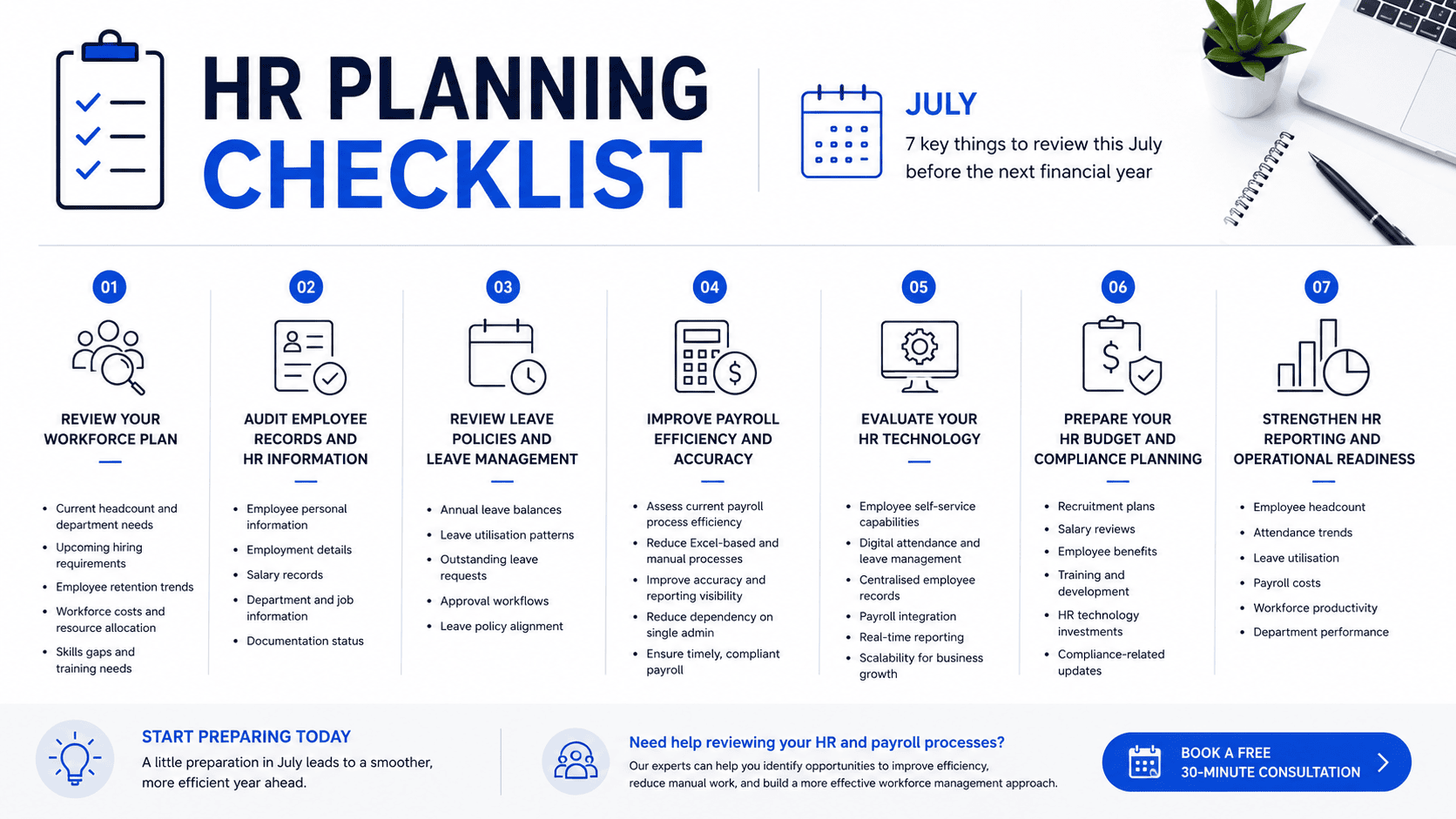
July is an ideal time for businesses to review their HR and payroll operations before financial year planning becomes more intensive.
By evaluating workforce planning, leave management, payroll processes, HR technology, and reporting capabilities early, companies can improve efficiency and prepare for future business needs.
BAS Solutions helps organisations streamline workforce management through integrated HR solutions, including BAS HR Suite, BAS Leave, and YesPay Payroll Managed Service, enabling businesses to simplify HR operations, improve accuracy, and build a more efficient workforce.
Ready to review your HR and payroll processes before the next financial year? Our team can help you identify opportunities to improve efficiency, reduce manual work, and build a more effective workforce management approach.
Copyright © 2026 Intercorp Solutions Pte Ltd