
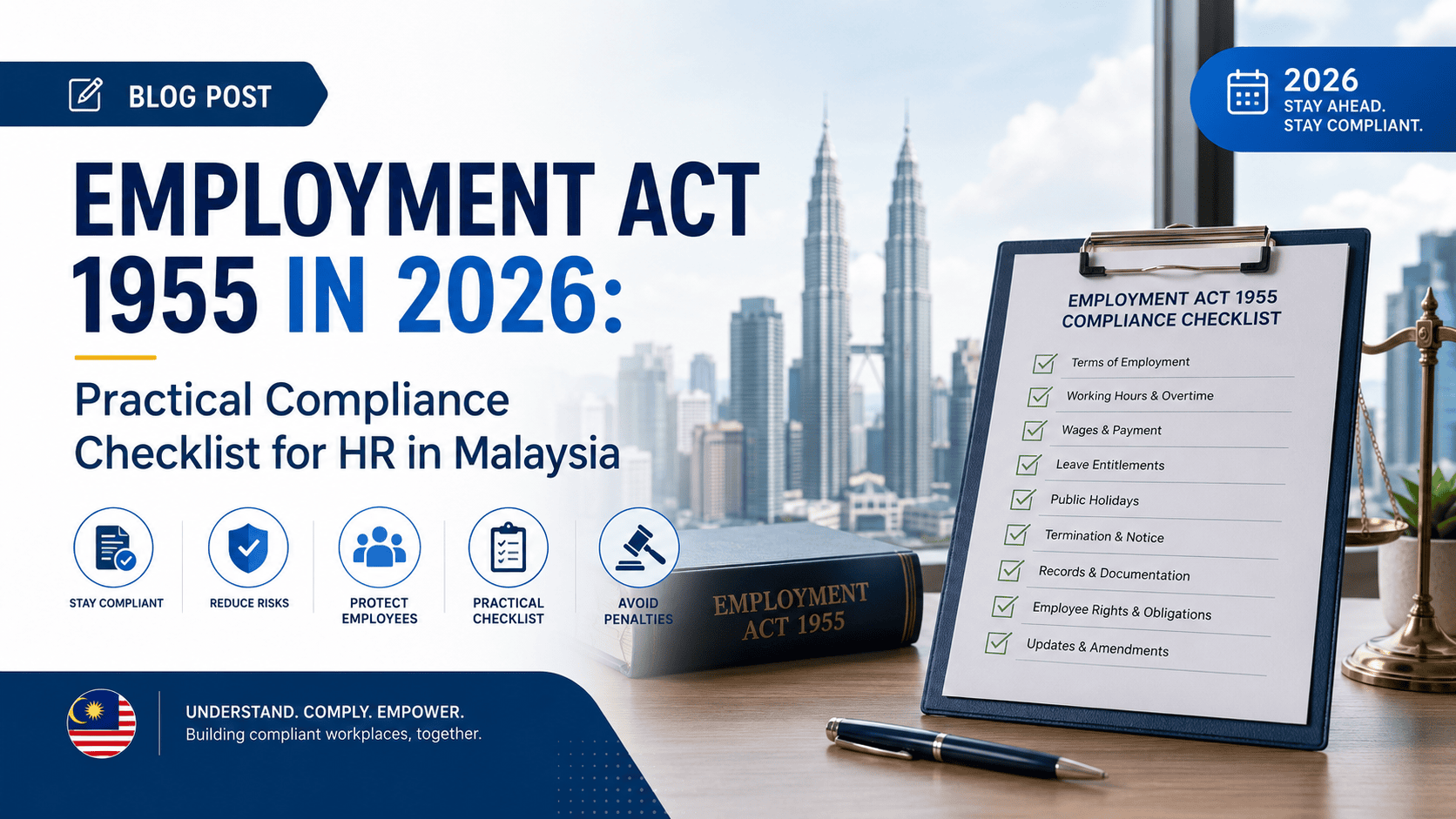
With EA 1955 amendments fully enforced and Department of Labour Peninsular Malaysia (JTK) inspections intensifying, Malaysian HR teams face greater compliance pressure in 2026. This guide covers key obligations, common risks, and how BAS HR solutions and YesPay Managed Payroll Services support audit readiness.
The 2022 amendments extended EA protections to all employees regardless of salary. Core compliance areas:
Minimum Wage
RM1,700/month (peninsular); RM1,600/month (Sabah, Sarawak, Labuan)
Working Hours
Max 45 hrs/week; OT at 1.5x, 2x (rest day), 3x (public holiday)
Leave
Annual (8–16 days), sick (14–22 days), hospitalisation (60 days), maternity (98 days)
Contracts
Written contracts mandatory; must cover wages, hours, and termination
Payslip
Itemised payslips required every pay period
Paternity Leave
7 days paid (married male employees, up to 5 children)
Statutory Contributions
Accurate, timely EPF, SOCSO, EIS, and HRDF remittance
Termination & Benefits
Benefits and notice periods per EA schedules and Industrial Relations Act
⚠️ Incorrect overtime: Flat-rate OT instead of statutory multipliers, especially for shift and public holiday workers
⚠️ Late or wrong payroll: Wages unpaid by the 7th, or underpayment from misclassified allowances
⚠️ Incomplete payslips: Missing deduction breakdowns; verbal notifications don’t comply
⚠️ EPF/SOCSO under-contribution: Excluding commissions or incentives from the contribution base
⚠️ Leave denial: Refusing or miscalculating statutory leave under EA Sections 37–42
⚠️ Poor record retention: Not keeping wage registers, contracts, and attendance records for 6 years
Monthly
Quarterly
Annual
On/Off-Boarding
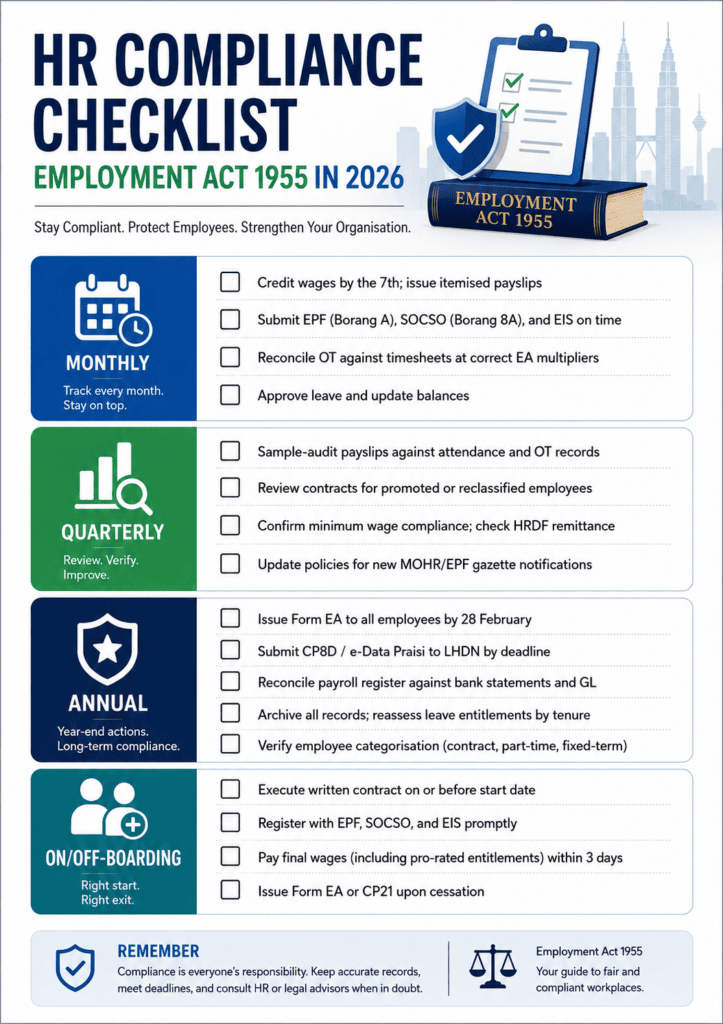
JTK can inspect with as little as 24 hours’ notice. Maintain these records for a minimum of 6 years:
Wage Registers
Monthly breakdown per employee (salary, OT, deductions, net pay)
Attendance Records
Time logs, OT authorisations, rest day/public holiday approvals
Employment Contracts
Signed originals plus all addendums (promotions, revisions)
Contribution Receipts
Monthly EPF, SOCSO, EIS, HRDF remittance confirmations
Leave Records
Applications, MC certificates, maternity/paternity notifications
Payslip Archive
Copies with proof of delivery, every pay cycle
Statutory Filing
Automated EPF, SOCSO, EIS, and LHDN submissions with full digital trails
Records Centralisation
All payroll runs, payslips, and contribution history in one platform
Audit Documentation
Structured reports in formats aligned with EA 1955 requirements
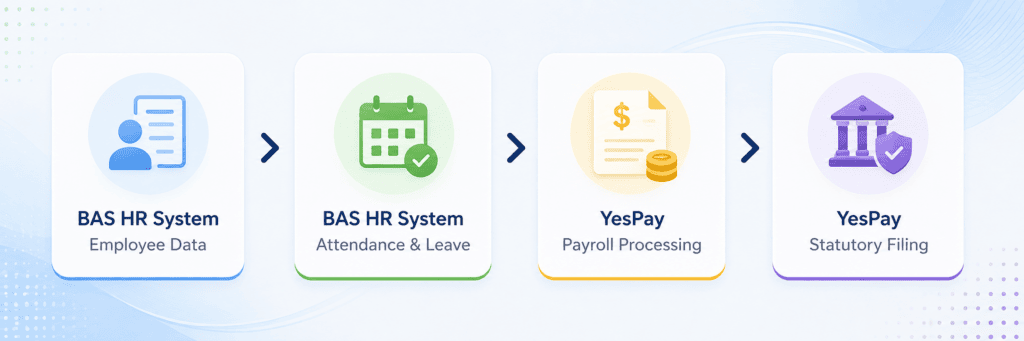
Real-time sync
Salary and headcount changes flow instantly; no manual exports
EA-compliant calculations
OT multipliers and deductions pre-configured to EA 1955 rules
Pre-payroll validation
Flags missing timesheets, below-minimum wages, and anomalies before approval
Audit trail
Every change logged with timestamps for regulatory review
1. Designate a compliance owner
One person monitors MOHR, EPF, and LHDN updates and drives internal changes
2. Audit payroll quarterly
Catch errors in payslips, OT calculations, and statutory submissions before JTK does
3. Keep contracts current
Reflect every promotion, salary change, and role revision in writing
4. Train line managers
Most EA breaches start at the manager level, not HR
5. Track gazette notifications
Wage and rate changes can take effect within weeks of publication
6. Use managed payroll for complex workforces
Multi-location or shift-based teams need embedded compliance expertise, not a single generalist
Improving Payroll Accuracy and Reporting Visibility with Intercorp and YesPay
Payroll errors don’t just cost money — they create audit exposure, erode employee trust, and signal non-compliance to regulators. Together, Intercorp and YesPay give HR teams real-time visibility into payroll accuracy, statutory calculations, and reporting status, so nothing slips through before the cut-off.
👉 Book a Free 30-Minute Consultation
Speak directly with an Intercorp HR solutions expert to find out how BAS HR and YesPay can simplify compliance, reduce payroll errors, and give your team full audit confidence — at no obligation.
Sources
All content in this article is referenced against current Malaysian legislation and official government portals. HR teams are encouraged to bookmark these sources for regulatory updates:
Ministry of Human Resources Malaysia (MOHR) Employment Act 1955 (Act 265), Employment (Amendment) Act 2022, and gazette notifications 🔗 www.mohr.gov.my
Jabatan Tenaga Kerja (JTK) — Department of Labour Peninsular Malaysia Labour inspections, compound notices, and enforcement guidelines 🔗 www.jtksm.gov.my
Disclaimer: For informational purposes only; not legal advice. Consult qualified HR or legal advisors. Always refer to the latest MOHR gazette notifications.
Copyright © 2026 Intercorp Solutions Pte Ltd